
What It Costs to Skip This
Put this off and the bill usually doesn't show up until the worst possible moment: a spring snaps at 6 a.m. during the season's first hard freeze and the door won't budge, or the opener strains against an ice-stiffened track and burns out the motor. A door that won't seal properly lets cold air pour into an attached garage all winter, which shows up later as a higher heating bill and, in older homes, as frozen pipes along that shared wall. None of these are expensive problems in October. By January, after a nor'easter or two, they usually are.
What a PA Winter Actually Does to a Garage Door
This area doesn't get one kind of winter weather, it gets all of them in rotation. Freeze-thaw cycles swell and contract metal and wood daily. Road salt gets flung up into the garage on tires and undercarriages, then sits on tracks and hardware. Humid summers leave moisture in wood doors and seals that then crack when temperatures drop. And when a nor'easter rolls through, wind-driven snow finds every gap in a door's weatherstripping. Add in the area's older housing stock, much of it with original doors and hardware, and small weaknesses that didn't matter in July become real problems by December.
Inspect the Springs Before the Cold Snaps Them
Garage door springs are under constant tension, and cold metal is more brittle than warm metal. A spring with a hairline crack or visible rust might make it through a mild fall only to fail the first week temperatures drop into the teens. Signs to watch for: the door feels noticeably heavier when lifted manually, it hangs unevenly, or you hear a loud bang from the garage (that's often a spring letting go). Do not attempt to replace or adjust a garage door spring yourself — it's one of the few home repairs where the tension involved can cause serious injury. If a spring looks worn or the door's balance feels off, that's a job to schedule now, before it becomes an emergency call in a snowstorm.
Weatherstripping and Seals: The First Line of Defense
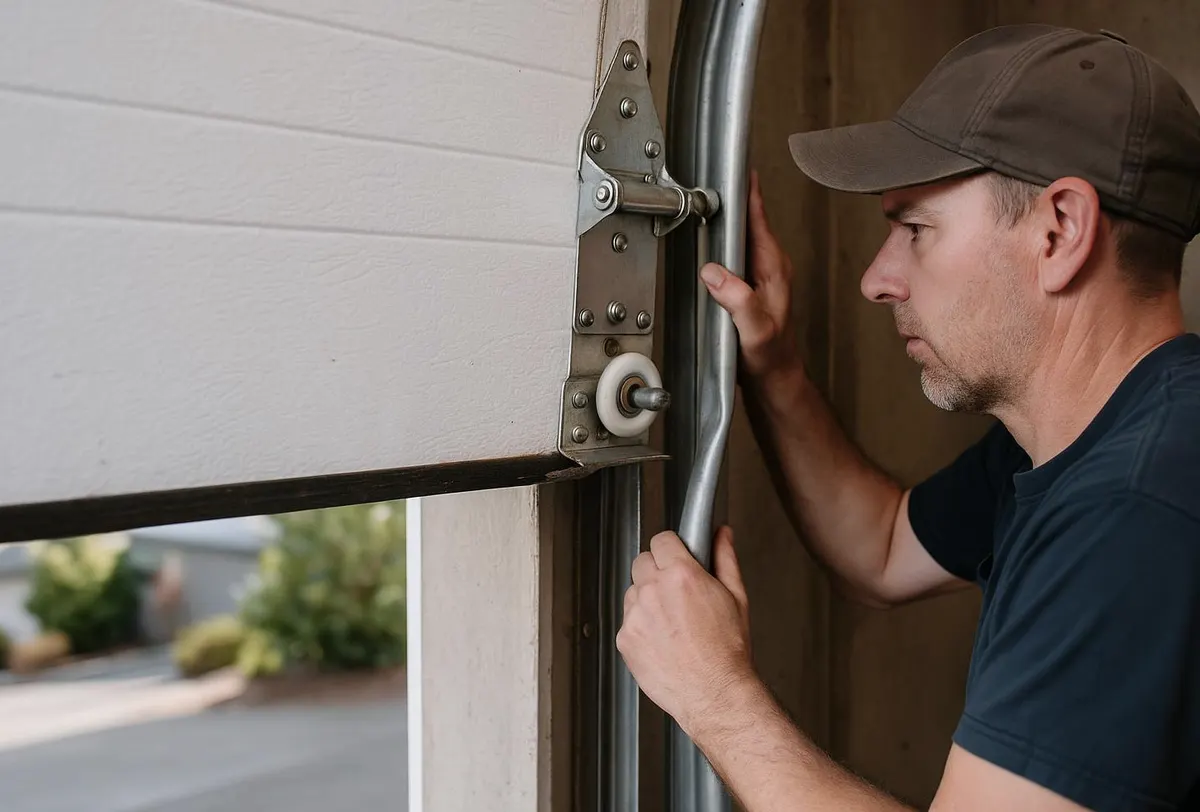
On older homes especially, the rubber seal along the bottom of the door and the vinyl astragal along the sides and top are usually the first parts to fail. Rubber stiffens and cracks after a summer of heat and humidity, and once it's brittle it won't flex back into place when temperatures drop. Walk around the door on a sunny day and look for daylight coming through gaps, or run a hand along the bottom seal to check for cracking and compression that no longer springs back. Replacing worn weatherstripping is inexpensive and direct, and it's the single easiest way to keep wind-driven snow and cold air out of the garage this winter.
Lubricate Moving Parts the Right Way
Hinges, rollers, and the track itself need lubrication before the first freeze, while everything is still moving freely. Use a silicone-based garage door lubricant rather than a general-purpose spray like WD-40, which tends to attract dust and grit and then gum up once temperatures drop. A light coat on hinges, roller stems, and the track helps prevent the grinding, sticking motion that's common on cold mornings when metal parts contract.
Test the Opener and Any Battery Backup
Cold weather makes opener motors work harder, and power outages are common during nor'easters, so this is the time to confirm everything is working as it should. Run the door through a full open-close cycle and listen for strain or hesitation. Test the auto-reverse safety feature by placing an object in the door's path. If the opener has a battery backup, check that it still holds a charge — losing power during a storm shouldn't mean losing access to the garage. Also wipe down the photo-eye sensors near the bottom of the tracks; built-up grime or frost on these can cause the door to refuse to close at all.
Clear the Tracks and Check Alignment
Road salt and grit get tracked in on tires all winter and settle into the garage door tracks, where they accelerate corrosion and interfere with the rollers. A quick wipe-down with a damp cloth, followed by a dry cloth, clears most of this out. While you're at it, check that the tracks are still plumb and evenly spaced — a track knocked slightly out of alignment during summer (by a stray basketball or bumped car mirror) will only get worse as freeze-thaw cycles shift the garage's framing.
Watch for Warping and Rust, Especially on Older Doors
Wood doors common on older homes in this area absorb humidity all summer and then contract and crack as winter dries the air out, which can lead to warping at the panel edges. Steel doors are more prone to rust developing at the bottom edge, where salt spray and melting snow sit longest. A close look now, while the door is easy to inspect in daylight, catches these issues while they're still cosmetic rather than structural.
When to Call Grantville Garage Door
If a spring looks worn, the opener is straining, or the door simply isn't closing the way it used to, that's the point to call in a professional rather than wait and see. Grantville Garage Door handles seasonal Garage Door Maintenance visits that cover exactly the inspection points above, along with Spring Replacement done safely with the right tools and tension equipment. If something fails outright during a storm, our Emergency Garage Door Service is there so a stuck or open door doesn't sit unresolved overnight.
If your garage door hasn't been looked at since last winter, now is the time. Contact Grantville Garage Door to get it ready for whatever this Pennsylvania winter brings.